March 7, 2026
On March 5, 2026, NASA issued a statement reporting that recent observations from the James Webb Space Telescope had ruled out the possibility that asteroid 2024 YR4 would strike the Moon in December 2032.
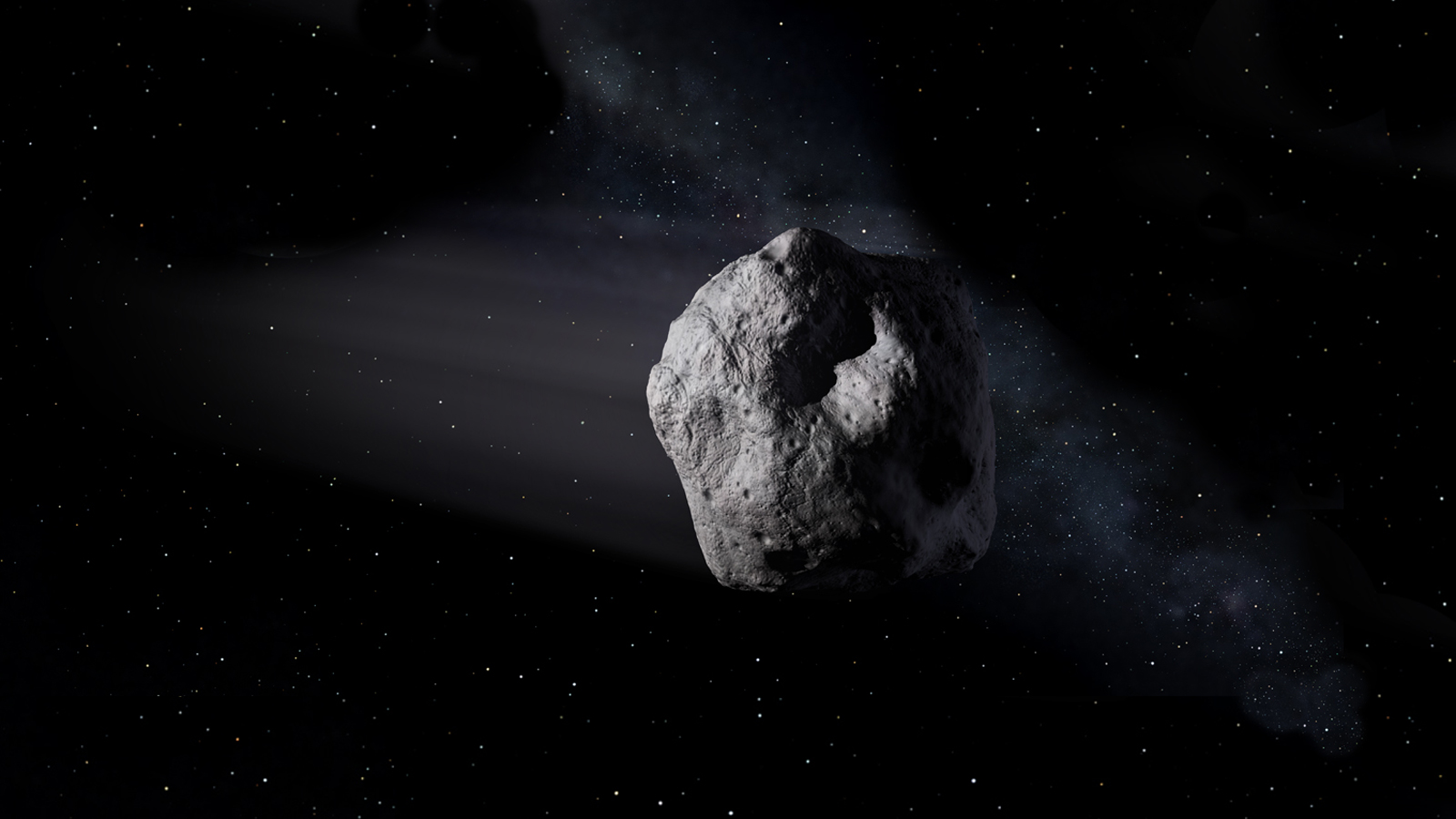
Asteroid 2024 YR4, about 60 meters wide, caught the public’s attention when it set records on NEO risk lists; early orbit calculations showed a small chance of it hitting Earth on 22 of December 2032. After the Earth impact risk was eliminated, a risk of moon impact remained.
Scientists at NASA’s Center for Near-Earth Object Studies used data from the James Webb Space Telescope collected on February 18 and 26, 2026, to refine the asteroid’s orbit. The new calculations show it will pass about 21,200 kilometers from the Moon, with no chance of hitting it.
The revised prediction resulted in a narrowing of the asteroid’s uncertainty region, rather than any alteration in its actual path. The new observations reduced the uncertainty in the predicted position of 2024 YR4 during its 2032 approach to the Moon. Now the moon is not in the uncertainty region.
One of the Faintest Asteroids Ever Observed by JWST
By April 2025, asteroid 2024 YR4 had moved so far from Earth that it became too faint for ground-based telescopes to see. NASA noted that the James Webb Space Telescope’s detection of this faint asteroid is among the dimmest it has ever recorded, underscoring its usefulness for planetary defense.
The observing effort was led by the Johns Hopkins Applied Physics Laboratory. Teams at NASA’s Jet Propulsion Laboratory and other institutions worked together to analyze the data.
Discovery and Early Impact Concerns
Early calculations, based on limited data, indicated a small percentage of valid orbits for 2024 YR4 impacted the Earth in 2032. As more observations came in, the impact risk increased to 3.1 percent before this possibility was ruled out.
There was a 4.3% probability of impact with the Moon that persisted until the most recent observations from the James Webb Space Telescope enabled a refined orbital calculation, eliminating the possibility of a lunar collision.
Safe Passage in 2032
- Earth impact probability: 0
- Moon impact probability: 0
- Predicted lunar flyby distance: ~21,200 km
In December 2032, asteroid 2024 YR4 will pass close to both Earth and the Moon without posing any danger to either.
A Demonstration of Planetary Defense Capability
Tracking asteroid 2024 YR4 shows how well today’s detection and monitoring systems work. We can now find and follow objects just tens of meters wide across millions of kilometers and predict their paths years ahead.
By combining worldwide survey data with precise measurements from space telescopes like the James Webb, scientists can identify possible impact risks long before they become real threats.
Planetary defense teams will continue monitoring near-Earth asteroids as part of global efforts to spot and track objects that could pose a threat.